Exponential Growth: Making Money Work While You Sleep
Compound interest is fundamentally different from simple interest. While simple interest only pays you on your principal, compound interest reinvests your earnings. Think of it as a snowball rolling down a mountain: as it moves, it picks up more snow, which increases its surface area, allowing it to pick up even more snow. In financial terms, your initial deposit earns interest, and in the next period, that interest also earns interest.
In professional wealth management, we look at the "Rule of 72" to gauge speed. If you earn a 7% annual return, your money doubles every 10.2 years. For example, a $10,000 investment in an S&P 500 index fund (which has historically averaged about 10% annually before inflation) would grow to approximately $67,000 over 20 years without adding another penny.
Real-world data from Vanguard shows that investors who stay disciplined for 30 years often see over 50% of their final portfolio balance coming strictly from compounded earnings, not their own out-of-pocket contributions.
The Cost of Waiting: Why Most People Fail at Compounding
The biggest threat to compounding isn't a market crash; it is procrastination. Most individuals treat saving as a "leftover" activity—investing whatever is remaining at the end of the month. This delay is mathematically devastating because the most powerful growth occurs in the final years of the cycle.
Consider the "Early Bird" paradox. If Person A invests $5,000 annually from age 25 to 35 and then stops entirely, they will likely end up with more money at age 65 than Person B, who starts at age 35 and invests $5,000 every single year until retirement. Person A’s money had an extra decade to "simmer."
Another pain point is "fee drag." A 1% management fee might sound small, but over 30 years, it can cannibalize up to 25% of your total potential wealth. When users stick to high-cost mutual funds instead of low-cost ETFs from providers like Charles Schwab or BlackRock (iShares), they are effectively giving away the "compound" part of their interest to the bank.
Strategic Recommendations for Maximizing Returns
Start with "Tax-Advantaged" Vehicles
To let compounding run wild, you must shield it from taxes. Using a Roth IRA or a 401(k) in the US, or an ISA in the UK, allows your gains to reinvest without the government taking a cut every year.
-
Why it works: Taxes act as a friction force. Removing a 15-20% capital gains tax annually can result in hundreds of thousands of dollars in extra growth over a lifetime.
-
Action: Max out employer matching first—it is a 100% immediate return on your investment.
Automate the "Drip" (Dividend Reinvestment Plan)
Don't take your dividends as cash. Most brokerages, such as Fidelity or Interactive Brokers, offer a "DRIP" setting.
-
In practice: If your Apple (AAPL) or Microsoft (MSFT) stock pays a dividend, the platform automatically buys fractional shares of that stock.
-
Result: You increase your share count without spending "new" money, which increases your next dividend payout, creating a feedback loop.
Utilize High-Yield Cash Reserves
For money you can’t risk in the stock market, move it out of traditional "big bank" savings accounts that pay 0.01%.
-
Tools: Neobanks like Revolut, Marcus by Goldman Sachs, or Ally Bank currently offer rates significantly higher than the national average.
-
The Math: Moving $50,000 from a 0.05% account to a 4.5% high-yield account earns you $2,250 in the first year versus $25. That is compounding you can see immediately.
Real-World Case Studies in Compounding
Case Study 1: The Consistent Middle-Manager
A 30-year-old marketing manager at a mid-sized firm began contributing $800 a month into a diversified portfolio (80% VTI, 20% VXUS).
-
The Strategy: They used "Dollar Cost Averaging," buying regardless of market volatility.
-
The Result: After 25 years, despite three major market corrections, the principal of $240,000 grew into approximately $820,000 (assuming a 7% average return). The interest earned surpassed the total contributions by nearly 250%.
Case Study 2: The Small Business Reserve
A boutique design agency started putting 5% of monthly profits into a Treasury Money Market Fund during a high-rate environment.
-
The Problem: The agency had $100,000 sitting idle in a standard business checking account earning zero.
-
The Action: They shifted it to a fund yielding 5.2%.
-
The Result: In just 12 months, they earned over $5,200 in interest—enough to cover their software subscription costs (Adobe Creative Cloud, Slack, Zoom) for the entire year for the whole team.
Compounding Optimization Checklist
| Step | Action Item | Target Metric |
| 1 | Check Expense Ratios | Aim for < 0.10% (e.g., VOO or VTI) |
| 2 | Enable DRIP | Set to "Automatic Reinvest" in brokerage |
| 3 | Frequency | Switch from Monthly to Bi-Weekly deposits |
| 4 | Inflation Adjustment | Increase contributions by 3% every year |
| 5 | Tax Shield | Ensure at least 50% of assets are in tax-advantaged accounts |
Common Pitfalls and How to Pivot
The "Withdrawal" Temptation
The moment you see your account reach $50,000, you might be tempted to withdraw $10,000 for a luxury vacation. In the world of compounding, that $10,000 isn't just $10,000—it is the "seed" for $80,000 thirty years from now.
-
Fix: Build a separate "Sinking Fund" for lifestyle purchases so your investment engine remains untouched.
Ignoring Inflation
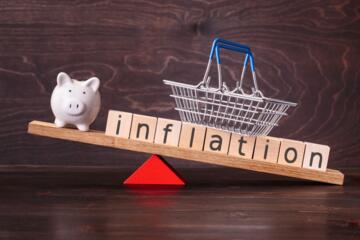
If your money grows at 5% but inflation is 4%, your "real" compounding rate is only 1%.
-
Fix: Invest in assets that historically outpace inflation, such as equities or real estate, rather than keeping the bulk of your wealth in long-term cash or low-yield bonds.
Chasing "Yield" Over Quality
High-yield "junk" bonds or speculative crypto projects might promise 20% returns, but if the underlying asset disappears, compounding stops.
-
Fix: Stick to "blue-chip" index funds or total market funds. Compounding requires survival first.
FAQ: What You Need to Know
How often should interest be compounded for the best results?
Daily compounding is technically better than monthly or annual compounding, but for most retail investors, the difference is marginal. The total annual percentage yield (APY) is a more important metric to watch than the frequency itself.
Is it too late to start compounding at age 50?
Never. While you have a shorter time horizon, you likely have a higher income than a 20-year-old. Aggressive "catch-up" contributions to a 401(k) or IRA can still see significant doubling effects over a 15-year period.
Can compound interest work against me?
Yes, in the form of high-interest debt like credit cards. If you carry a balance at 24% APR, the bank is using the power of compounding against you. Paying off high-interest debt is a "guaranteed" return that you should prioritize before investing.
Do I need a lot of money to start?
No. Apps like Acorns or Betterment allow you to start with "round-ups" or as little as $5. The goal is to establish the habit and let the time component of the math do the heavy lifting.
Is compound interest guaranteed?
In a savings account or CD, yes (up to FDIC limits). In the stock market, returns are not guaranteed year-to-year, but over 10-20 year cycles, the upward trajectory of the market acts as a functional equivalent for compounding.
Expert Insight: The Psychology of the "Quiet Years"
In my years analyzing wealth trajectories, I’ve observed that the hardest part of compounding isn't the math—it's the boredom. For the first 7 to 10 years, the growth feels agonizingly slow. You might see your balance go from $10,000 to $15,000 and feel like nothing is happening. However, there is a "tipping point" where your annual interest earned begins to exceed your annual contributions. That is when the magic becomes visible. My advice: ignore the daily tickers. Set your automation, choose low-cost funds like the Vanguard Total Stock Market ETF, and judge your progress in decades, not quarters. Patience is the highest-paying skill in finance.
Conclusion
To truly harness compound interest, you must transition from a "saver" to an "investor." Start by auditing your current accounts. If your money is sitting in a traditional bank account, you are losing purchasing power every day. Open a brokerage account with a reputable firm like Charles Schwab or Vanguard, select a broad-market index fund, and set up an automatic monthly transfer. Remember, the best time to start was ten years ago; the second best time is today. Focus on consistency over intensity, and let time handle the rest.